How the Game Mechanics and Grid Systems Work
Understanding gameplay mechanics is essential for mastering Sudoku - Classic Sudoku Puzzle. The app is built around multiple grid formats and structured solving systems that support both beginners and advanced players.
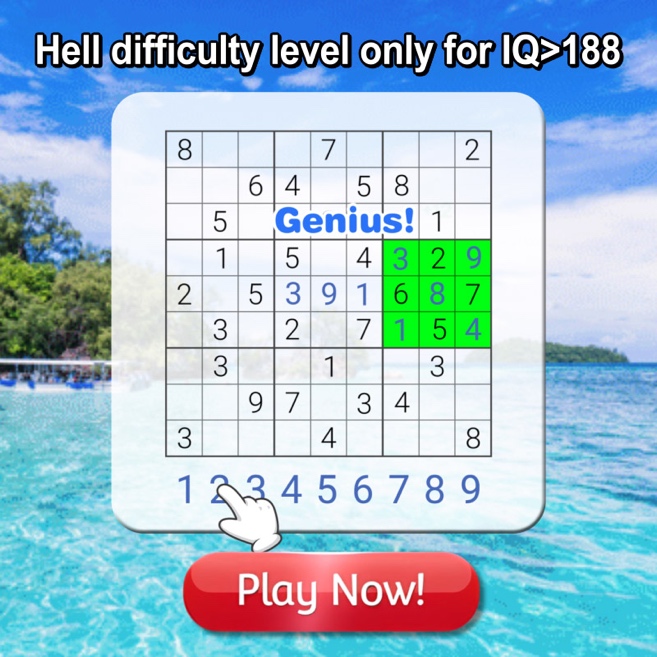
The foundation of the game is the classic 9×9 Sudoku grid. Each puzzle is divided into nine 3×3 subgrids. Players must place numbers from 1 to 9 in every row, column, and subgrid without repetition. This format trains basic logical reasoning and systematic thinking.
For experienced users, the app offers 16×16 Sudoku grids. These larger boards expand the number range and require more advanced planning. Solving these puzzles demands strong pattern recognition and multi-step analysis.
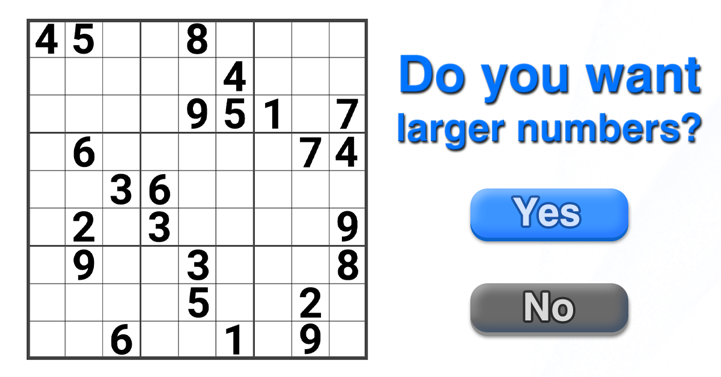
Mixed number-and-letter Sudoku introduces additional complexity. In this mode, symbols and letters replace traditional numbers, forcing players to rely on logical relationships rather than memorized sequences. This strengthens abstract thinking skills.
All game modes use a built-in validation system. Incorrect entries can be highlighted in real time, helping players recognize mistakes and adjust strategies. Optional hint functions provide guidance without revealing complete solutions.
Difficulty levels are generated through intelligent algorithms. Each puzzle is designed to have a unique solution, ensuring fairness and consistency. Complexity increases through structural variation rather than random guessing.
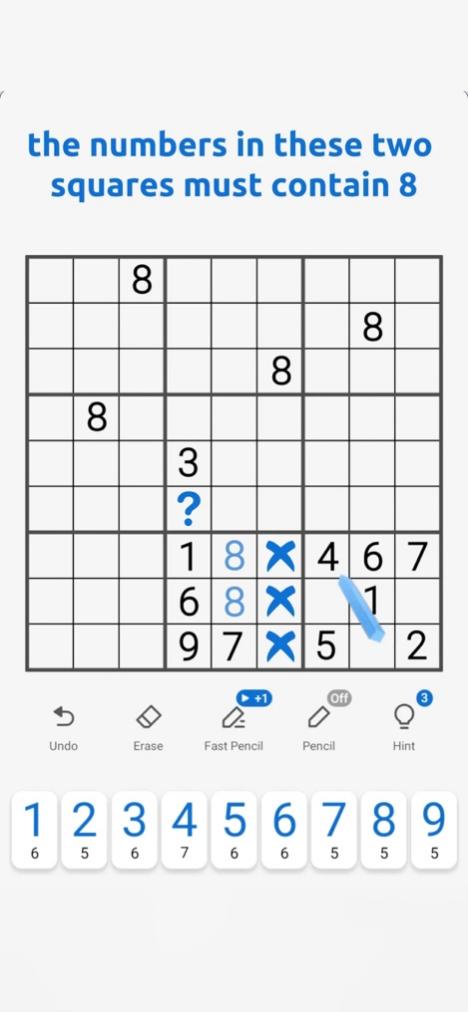
Touch-based controls allow precise input and easy correction. Players can place, erase, and annotate numbers efficiently, supporting smooth problem-solving workflows.
By integrating multiple grid systems with intelligent feedback mechanisms, Sudoku - Classic Sudoku Puzzle delivers a flexible and scalable logic training environment.